Disclosure: This article contains affiliate links. If you use them we may earn a commission. It never changes what you pay.
An affiliate site is a business. It has revenue, costs, traffic and a lifespan. The first three get all the attention while you are building it. The fourth decides what you walk away with, and by the time you want out, the numbers that set the price are already on record.
Buyers have no shortage of sites to look at. What they lack is sites they can trust. Everything below is written from the buyer's side of the table, because that is where the price is set and where deals quietly die.
Browse businesses for sale worldwide on World Businesses for Sale →
What you are actually selling
Nobody pays for your theme, your stack or your publishing schedule. A buyer pays for the things that keep producing after you stop touching them:
- Traffic that arrives without you. Search, email, social or paid, and how much comes from each. One channel that supplies 90% of sessions is not an asset, it is a single point of failure with a price attached.
- Revenue with a paper trail. Network dashboards, affiliate IDs, payout records and at least twelve months of them. A screenshot of a good month is not evidence; a bank statement that matches a network report is.
- Content that ranks. Articles with history, internal links and a reason to exist. Three hundred posts published the same week last quarter read as a liability, not a library.
- A domain and a brand with age. Registration history, clean linking, and a name someone would recognise. Age is not vanity. It is the cheapest proxy a buyer has for "this survived an update".
- Systems. The scripts, templates and workflows that make publishing repeatable. If the business only runs because you personally write every post and check every link, the buyer is pricing in a hire, and it comes out of your side.
The gap between what a seller lists and what a buyer will sign for is almost always one of those five items, not the traffic figure.
The numbers a buyer asks for first
Affiliate and content sites are priced as a multiple of monthly net profit, not of revenue. Buyers commonly talk in the 30× to 40× range for a clean, diversified site, with anything above that reserved for businesses with unusual durability. Expect the multiple to move down for a single traffic source, a thin content moat, a short trading history, or revenue that depends on one merchant.
Before a serious conversation, know these cold:
- Net profit per month for the last twelve, with the costs that got you there. "Gross commissions" is a starting point, not an answer.
- Revenue by merchant. If one programme pays for the site, a commission change or a policy update is a business risk the buyer is buying.
- Traffic by source and by landing page. You already need this for your own reporting: automating affiliate reports pays for itself twice when a buyer asks for twelve months of it.
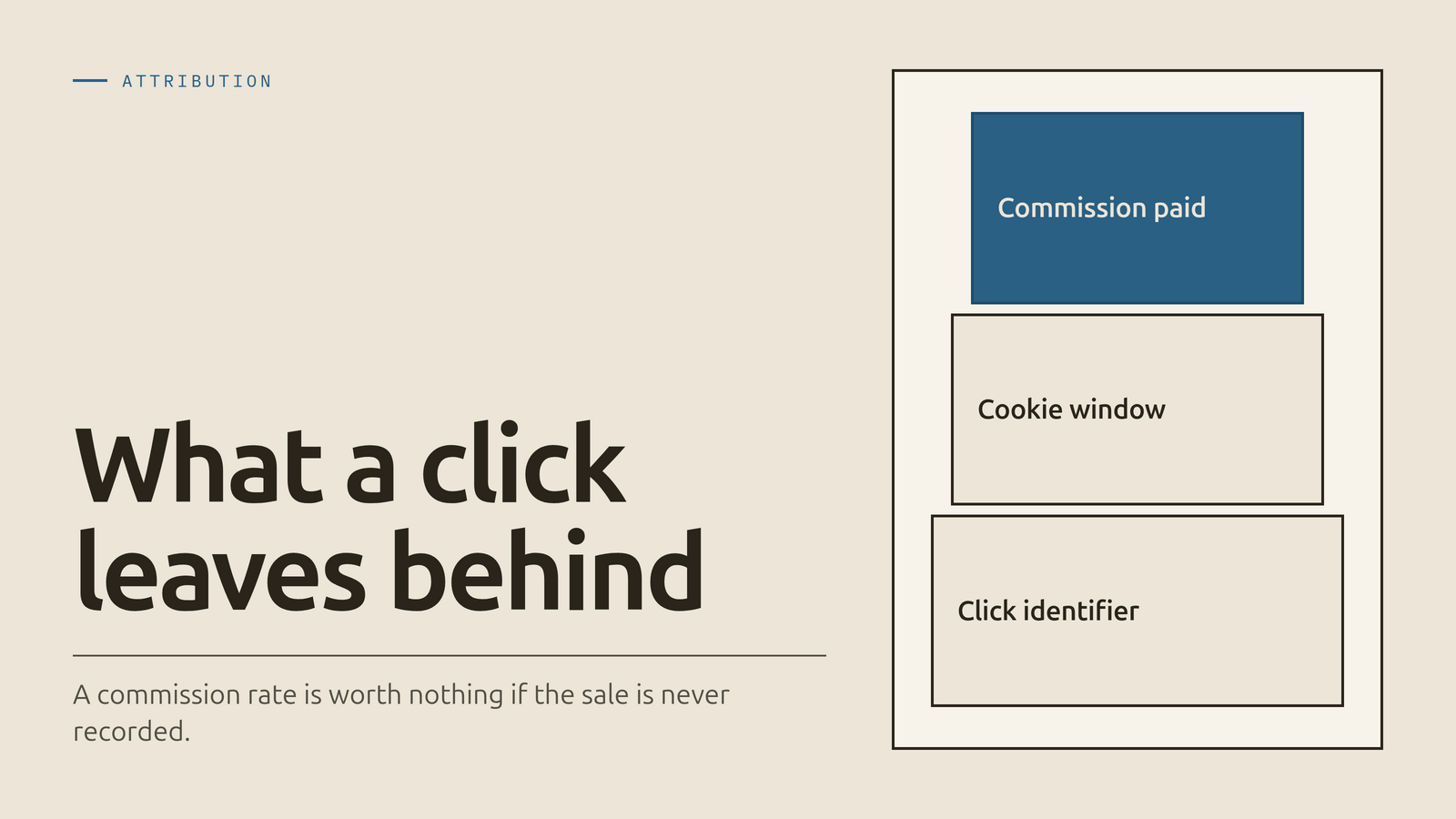
- Conversion path. Where the click goes, how it is tracked, and what happens when tracking fails. This is attribution as a due-diligence item.
Three things that kill the deal
Unexplained traffic. A buyer who cannot see where sessions come from will assume the worst, and the worst is usually a paid or expired source nobody has told them about. Export Analytics and Search Console yourself, month by month, before anyone asks.
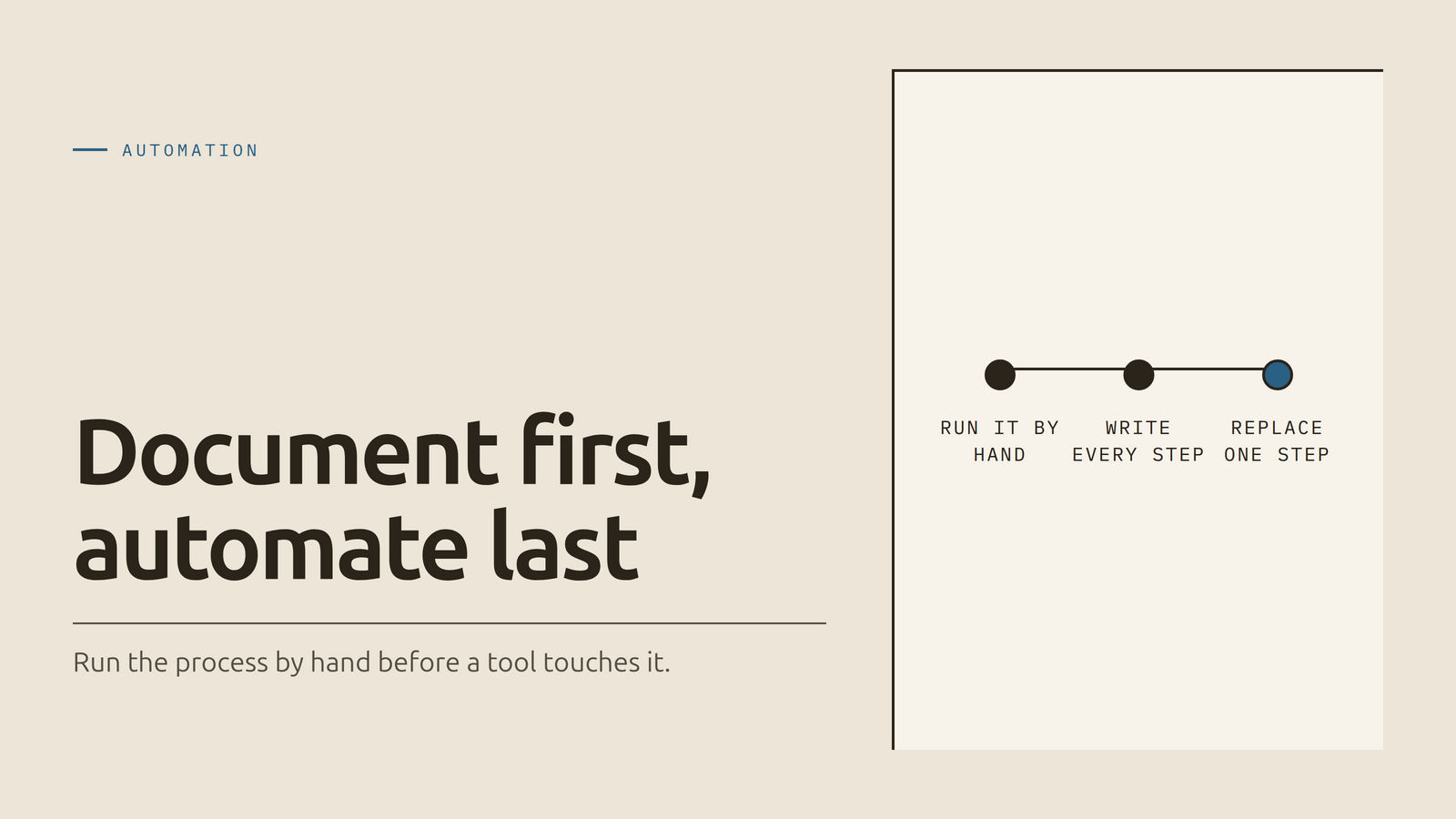
Owner dependence. If the content pipeline, the link placement and the merchant relationships all run through one person, the buyer is buying a job, not a business. Document the process, or hire the one thing you cannot stop doing.
Policy exposure. Read the network terms and the platform rules your funnel depends on, and write down what would break the site. A buyer is not looking for a business with no risks; they are looking for one where the risks are known and priced. Reading platform policy changes is part of preparing a listing, not just protecting your traffic.
Where an affiliate business changes hands
Digital-only marketplaces are the usual route for a content or ecommerce site. Flippa and Empire Flippers exist for exactly that trade and are worth a look. If you would rather not pay a percentage of the sale, or you want your listing in front of buyers who are buying companies rather than websites, a general business marketplace is the other route.
World Businesses for Sale lists businesses in the UK, US, Canada, Australia and Europe, including online stores, subscription services and digital platforms alongside cafés, workshops and warehouses. Sellers pay for a listing plan rather than a broker's cut, buyers browse free, and there is optional advisory support if you want help with pricing or the negotiation itself. If your site is the only digital asset in a marketplace full of companies, that is usually an advantage: you are competing against fewer lookalikes.
Whichever route you take, the destination page tells you how the seller is treated. Read the listing terms before you write the advert, not after.
Preparing the listing
A listing is a sales document and a due-diligence pack at the same time. The sellers who close fastest have one folder ready before anyone asks:
- A profit-and-loss summary by month, with the platform fees, tools and writer costs shown.
- Analytics and Search Console exports, ideally covering a full year and a full update cycle.
- A content inventory: every published post, its main keyword, its traffic and its affiliate links.
- Copies of network agreements and any contracts a buyer would inherit.
- A short written answer to "what would you do with this if you had another 20 hours a week?"
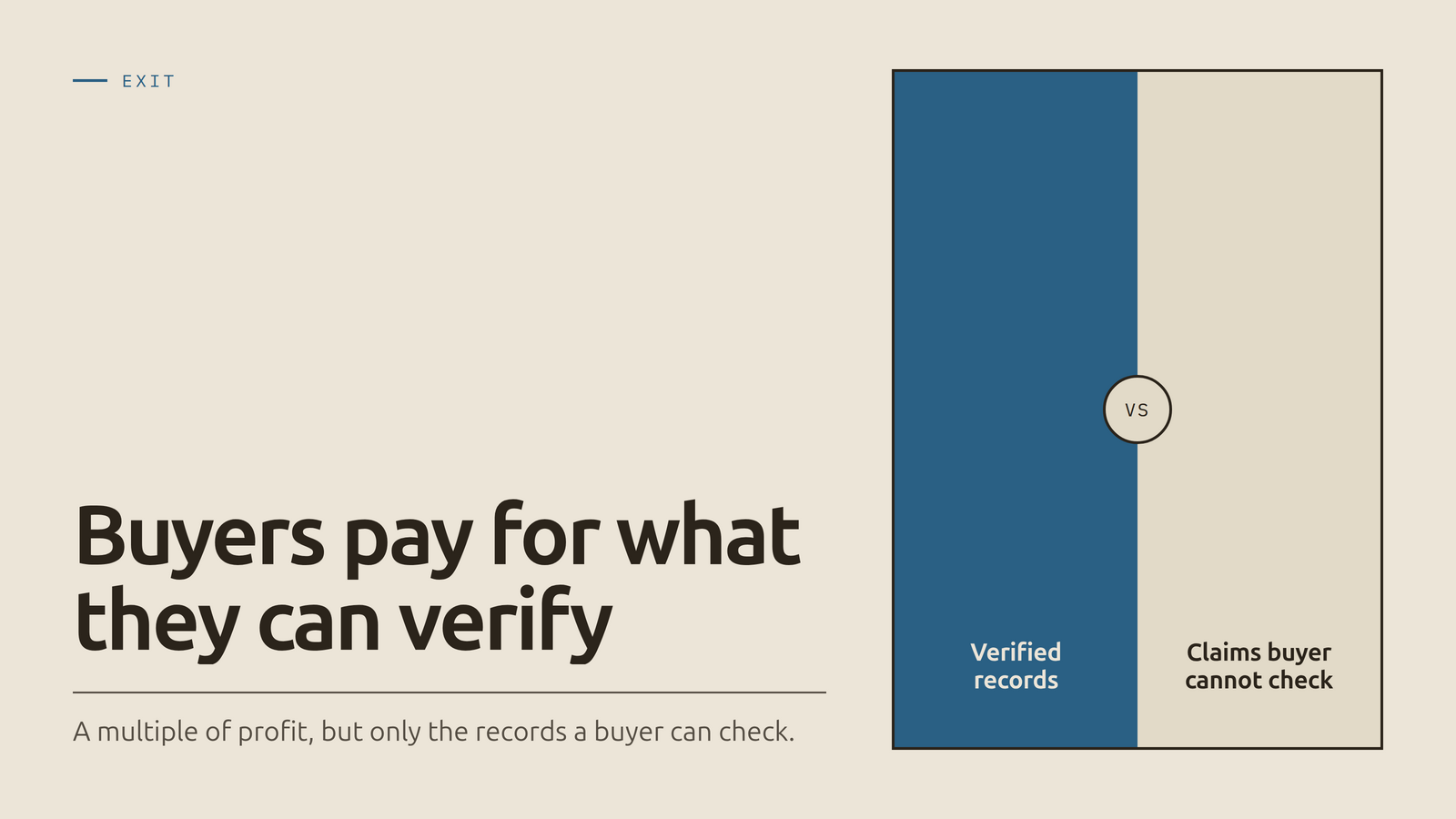
Nobody expects a perfect set. They expect the numbers you quote to be checkable, and they will price the site down for anything you leave them to guess.
If you would rather buy than build
The same checklist runs in reverse. Buying an established site gets you revenue and a history on day one, which is exactly what a new site cannot offer. It also means you inherit every decision the last owner made: the thin content, the expired links, the programme that has been paying less each quarter.
Ask for the same twelve months of profit, the same traffic breakdown and the same attribution path you would hand a buyer. If the seller cannot produce them, the answer is the asking price minus the discount you are about to spend a year discovering. Browse the listings yourself before you commit to building from zero: see what is actually for sale →
An affiliate site is worth what a stranger can verify, multiplied by how long they believe it will last. The work of selling starts long before the listing goes up.